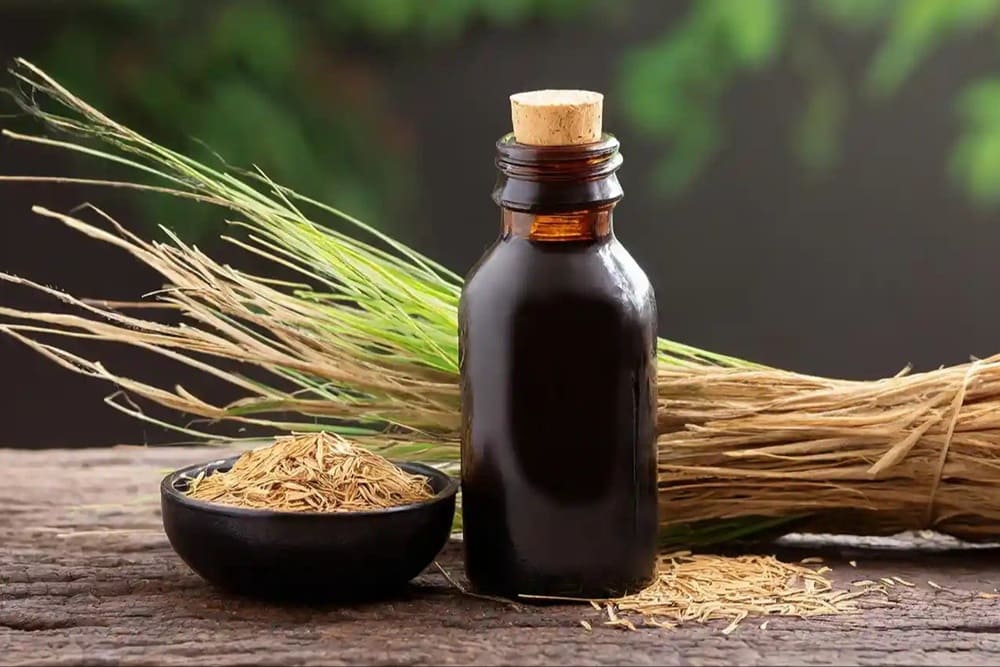
There are only three commercially significant vetiver oil origins in global trade: Haiti, Indonesia, and India.
Each produces a chemically and aromatically distinct oil. And each attracts a different kind of buyer.
Haitian vetiver — lighter, more herbaceous, high in international volume — dominates the commodity fragrance and aerosol market. Indonesian vetiver is versatile and competitively priced, widely used in industrial and household product formulations.
Indian vetiver — known as khus oil in domestic trade, and produced primarily in the Kannauj belt of Uttar Pradesh — is something else. It carries a deeper sesquiterpene complexity. A characteristic woody-earthy-smoky quality that centuries of traditional distillation in the same geography have refined into something the commodity market cannot replicate at volume.
If you are sourcing vetiver oil for high-end fragrance, natural perfumery, luxury skincare, or pharmaceutical applications, understanding what separates Indian vetiver from every other origin — and what separates a verified distillery from a broker who has memorised the right vocabulary — is the most important work your sourcing process can do before a purchase order is raised.
This guide covers both.
Why Indian Vetiver Holds a Distinct Position in Global Trade
The city of Kannauj, in the Gangetic plains of Uttar Pradesh, is sometimes called the perfume capital of India. It is the historical centre of Indian attar production — traditional solvent-free distillations of flowers and botanicals into sandalwood oil base, a practice with documented roots in the Mughal era.
Vetiver root distillation from the surrounding rural belt feeds directly into this tradition. The alluvial soil chemistry of the Gangetic plains, the local groundwater, and the specific root drying and preparation practices developed in this region produce a khus oil with a compound profile that consistently attracts premium buyers from European and American fragrance houses.
This is not simply an origin story. It is reproducible chemistry. A Kannauj-origin khus oil from a documented distillery is not a romantic claim — it is a trackable specification that buyers can confirm via GC/MS analysis and that suppliers with genuine traceability can substantiate with harvest and distillation records.
The commercial reality is that not every vetiver oil labelled “India origin” comes from Kannauj. Rajasthan supplies significant commercial volumes. Tamil Nadu contributes to the industrial grades. And India’s position as an essential oil processing hub means that internationally sourced raw oil is sometimes blended or re-distilled domestically and exported as Indian-origin material.
Knowing exactly what you’re buying — and from whom — is not pedantry. It is the foundation of a supply relationship worth building.
The Chemistry of Indian Vetiver Oil
Vetiver oil is one of the most chemically complex essential oils in commercial trade. A full GC/MS analysis will typically identify more than 100 individual compounds. This complexity is not a quality problem — it is the source of the oil’s commercial value. The blending stability, the fixative power in fragrance applications, and the depth of the aromatic profile all derive directly from this sesquiterpene richness.
The primary quality markers that experienced buyers track in Indian vetiver are:
GC/MS Compound Profile — Indian Khus Oil (Chrysopogon zizanioides)
| Compound | Typical Range (%) | Commercial Role |
|---|---|---|
| Khusimol | 5–15% | Primary quality marker; earthy, woody character |
| Isovalencenol | 3–8% | Key sesquiterpene alcohol; aromatic depth |
| α-Vetivone | 2–6% | Characteristic smoky, earthy note; fixative anchor |
| β-Vetivone | 2–5% | Supports the vetiver accord in fragrance blending |
| Vetiselinenol | 3–7% | Contributes to the smoky-rooty profile |
| Khusimenol | 1–4% | Supporting sesquiterpene character |
| Eudesmol | 2–5% | Common sesquiterpenol; blending stability |
| Prezizaene | 1–3% | Minor terpene component |
A GC/MS report for Indian vetiver should show Khusimol as the dominant quality marker, with clear α-Vetivone and β-Vetivone contributions. These three compounds together establish the characteristic Kannauj vetiver profile — the chemistry that distinguishes Indian origin material from Haitian or Indonesian grades in a formulation.
Physical parameters to verify independently:
- Specific Gravity (at 25°C): 0.987–1.002 (vetiver is one of the few essential oils denser than water)
- Refractive Index: 1.515–1.525
- Colour: Amber to dark brown (lighter or water-clear material warrants investigation)
- Viscosity: Thick at room temperature; gentle warming is standard before pouring or weighing
India’s Vetiver Producing Regions — What Each Delivers
Kannauj, Uttar Pradesh
The benchmark origin. Kannauj-region vetiver benefits from the deep alluvial soil of the Gangetic plains, traditional root preparation techniques, and a multigenerational distillation knowledge base. The resulting oil is darker in colour, more viscous, and carries the full sesquiterpene complexity that premium fragrance buyers specify by name. This is the origin to confirm with documentation when traceability back to the distillery is a formulation or compliance requirement.
Rajasthan
Commercial-scale vetiver production in Rajasthan is significant in volume. The drier climate and different soil chemistry produce an oil with a slightly drier, more resinous character. Rajasthan-origin khus oil is widely used in cosmetic formulations, Ayurvedic preparations, and mid-tier fragrance compounds where volume consistency matters more than the nuanced aromatic complexity of Kannauj material.
Tamil Nadu and the Southern Belt
Vetiver cultivation in the southern region produces roots used primarily in traditional products — mattings, screens, water-cooling applications — and feeds into the lower end of the essential oil market. Not typically the source material for premium fragrance-grade exports, though it is present in the broader Indian market at attractive price points.
For fragrance-grade and luxury cosmetic applications, requesting Kannauj-origin documentation explicitly is worth doing. For functional cosmetic and personal care applications where the aromatic profile is secondary to the technical specification, Rajasthan commercial grade will often perform at a better price-to-specification ratio — and a good supplier will tell you which is right for your formulation without needing to be asked twice.
Quality Grades and What Each Means for Your Application
Indian vetiver oil is sold across several distinct quality tiers, and the terminology suppliers use is not always consistent. Here is what to look for:
Ruh Khus — Traditional Steam Distillation
The premium grade. Steam-distilled from dried vetiver roots at established distilleries, typically over a long distillation cycle — vetiver requires significantly more extraction time than lighter essential oils like lemongrass or peppermint. Full sesquiterpene profile, characteristic earthy-woody-smoky note, deep amber colour. This is the grade preferred by natural perfumers, luxury fragrance houses, and premium cosmetic brands who need verifiable Kannauj provenance.
Commercial Grade — Industrial Distillation
Produced at higher-volume distilleries with shorter cycle times. Acceptable Khusimol content but typically lower in minor compound complexity. Suitable for functional cosmetic formulations, wellness products, and fragrance blends where vetiver is a supporting note rather than a lead ingredient.
Solvent Extracted or CO₂ Extract
A different product from steam-distilled vetiver oil. CO₂ extraction captures a broader molecular range — including waxes and higher molecular weight compounds — producing an absolute that is highly valued in fine fragrance applications but used differently in formulation. Specify the extraction method explicitly in every purchase order. A supplier who does not distinguish between these grades on request is telling you something important about their supply chain.
Certifications That Matter for Indian Vetiver Oil Exports
GMP (Good Manufacturing Practice): Critical for pharmaceutical, Ayurvedic product, and premium cosmetic buyers. Vetiver is used across a wide range of health and wellness preparations — your Indian supplier’s facility should hold current GMP certification.
ISO 9001:2015: Documents repeatable quality management processes. For a distillery producing an inherently variable natural product like vetiver oil, this certification is evidence that the variables they can control, they have controlled.
IFRA Compliance Documentation: For fragrance house buyers in the EU and USA, IFRA compliance records confirming maximum usage levels for vetiver oil across product categories (leave-on skin, rinse-off, fragrance neat) are standard expectation. Request these alongside the COA.
Organic Certification: Organic vetiver oil is available from certified farms in India and commands a premium of 25–40% over conventional grade. If you are formulating for the certified organic personal care market, confirm that the certification chain runs from the farm through distillation — not just at the point of export.
Spices Board of India: As with all Indian essential oil exports, Spices Board registration is the baseline credential confirming your supplier is an authorised export entity. If they cannot produce their registration number on request, they are not a verified exporter — and the traceability claim ends there.
What a Vetiver Oil COA Must Include
Vetiver Oil / Khus Oil — COA Checklist
- Batch number and distillation date
- Botanical name — Chrysopogon zizanioides (syn. Vetiveria zizanioides)
- Country and region of origin (state-level minimum; distillery name preferred)
- Plant part used — roots (confirm explicitly; leaf-derived oil is a different product)
- Extraction method — steam distillation (or CO₂/solvent if applicable)
- Specific gravity (typical: 0.987–1.002)
- Refractive index (typical: 1.515–1.525)
- Full GC/MS compound breakdown — minimum 15–20 compounds listed
- Khusimol % stated explicitly as a named compound
- α-Vetivone and β-Vetivone % listed separately
- Shelf life and storage conditions (cool, dark storage; vetiver oil is stable but sensitive to light over long periods)
- Analyst signature and independent lab reference
- Batch-matched documentation linking COA number to invoice number
One technical note: vetiver oil’s high viscosity means incomplete dissolution during GC/MS sample preparation can skew minor compound readings. An experienced independent lab will account for this. If your incoming quality checks show inconsistent minor compound ratios between batches despite consistent Khusimol levels, ask your laboratory about their sample preparation protocol before assuming a supply issue.
Bulk Sourcing: Quantities, Lead Times, and What to Expect
Vetiver oil sourcing timelines differ from lighter essential oils. The long distillation cycle — typically 18–24 hours per batch compared to 3–4 hours for lemongrass — means production lead times are longer and small-volume spot orders can be difficult to fill from verified distillery stock during high-demand periods.
Standard commercial configurations from a verified Indian exporter:
- Specification samples: 50–250 ml for GC/MS confirmation and formulation trials
- Trial orders: 1–5 kg in glass or high-grade aluminium containers
- Commercial quantities: 25 kg, 50 kg drums
- Industrial volumes: 100 kg+ in stainless IBC or multi-drum configurations
Pricing reflects origin, grade, and certification tier. Organic Kannauj-origin ruh khus carries a meaningful premium over commercial-grade Rajasthan material — typically 30–45% depending on harvest year and batch volume. For buyers building a premium formulation around vetiver as a lead ingredient, that premium is recoverable in the finished product price and worth building into the sourcing specification from the start.
At EssentialOilsExport.com, we source verified Indian vetiver oil from documented distilleries in the Kannauj region and supply both commercial and organic-certified grades. Every consignment includes full COA, GC/MS report, MSDS, and export documentation for FDA Prior Notice (USA), REACH compliance (EU), and Australian Department of Agriculture clearance.
Conclusion
If you are buying vetiver oil and origin traceability matters to your formulation — or to your customer’s expectations — India’s Kannauj belt offers something no other origin can replicate. The combination of traditional distillation practice, regional soil chemistry, and a documented multigenerational supply chain produces a khus oil that holds a distinct position in the global market for very specific, verifiable reasons.
But the gap between “India origin” on an invoice and a batch-specific, GC/MS-verified, distillery-traceable consignment from Kannauj is significant. We work with buyers on both sides of that gap regularly — and the ones who build the strongest formulations are almost always the ones who asked for the documentation upfront rather than after a production issue.
If you are ready to move forward with a trial quantity of certified Indian vetiver oil, or you have a formulation specification you’d like us to match, send it through. We will come back with batch availability, full pricing, and the complete documentation package for your target market.
No pitch. Just a clear answer to a clear specification.
Ready to source certified Indian vetiver oil with full documentation?
Visit EssentialOilsExport.com to request a sample, review current batch availability, or send us your specification. Our team responds within 24 hours.
Published by EssentialOilsExport.com
GMP | ISO 9001:2015 | HACCP | HALAL | KOSHER | FSSAI | Spices Board of India certified.
India  | Japan
  | Australia
Exporting to 15+ countries across North America, Europe, and Asia-Pacific.