
Malaysia sits at the center of two overlapping essential oil markets: a fast-growing halal-certified personal care sector and a food and beverage industry that draws on spice oils for flavoring. A buyer who wants to import bulk essential oils into Malaysia for the first time needs to resolve three questions before the first purchase order goes out: which HS code and duty rate the shipment falls under, whether the end product needs NPRA cosmetic notification or halal certification, and what documents customs at Port Klang will ask to see. This guide answers each question using the framework the Royal Malaysian Customs Department and the National Pharmaceutical Regulatory Agency currently apply to essential oil shipments.
The requirements differ sharply depending on end use. An essential oil destined for a diffuser blend faces a lighter compliance path than the same oil formulated into a leave-on skin cream, and a spice oil sold as a food flavoring answers to the Ministry of Health rather than NPRA. Buyers who confirm the correct classification before shipping avoid the two most common delays at Malaysian customs: a K1 declaration filed under the wrong HS code, and a cosmetic notification submitted after a batch is already finalized for sale rather than before. Getting this sequence right on the first order also shortens the path to a confirmed repeat shipment.
Before requesting a quote, have the target oil, the intended end use in Malaysia (cosmetic, food, or diffuser and aromatherapy), and the expected order volume ready. This lets our export team match the documentation package, including GC-MS results and halal status, to the shipment from the first conversation.
HS Code, Customs Duty, and SST on Bulk Essential Oil Shipments
Malaysian customs classifies bulk essential oils, including concretes, absolutes, and resinoids, under HS heading 3301, the same heading most trading partners use. Malaysian customs commonly assesses import duty on this heading at a low or zero rate for raw material entering further manufacturing, though the exact figure depends on the specific tariff line and the oil’s declared use. Sales and Service Tax then applies on top of the duty-inclusive value, generally at the standard rate unless the shipment qualifies for a manufacturing-input exemption.
Malaysian customs requires a K1 import declaration, filed electronically through the national single window, for every shipment regardless of whether duty is owed. The declaration should carry:
- Commercial invoice showing the exact tariff heading claimed
- Packing list matching drum or IBC count to the bill of lading
- Bill of lading or air waybill
- Certificate of origin, particularly where a preferential ASEAN tariff rate is being claimed
- Certificate of Analysis and GC-MS report tied to the batch number
Buyers consolidating several products into one order can review the current essential oils catalog before finalizing quantities, since grouping shipments under a single declaration often simplifies the K1 filing.
Does an Essential Oil Need NPRA Cosmetic Notification Before Sale in Malaysia?
An essential oil needs NPRA cosmetic notification only when a manufacturer formulates it into, or sells it as, a skin, hair, or nail product; a diffuser oil, an aromatherapy oil, or a food flavoring falls outside that requirement. The distinction rests on labeled end use rather than on the botanical source, so the same lavender oil can require notification in one format and not in another.
Malaysia’s National Pharmaceutical Regulatory Agency reviews cosmetic notifications against the ASEAN Cosmetic Directive, the shared ingredient and labeling framework used across Southeast Asia. A Malaysian entity, registered with the Companies Commission of Malaysia and holding cosmetics within its scope of business, must act as the Cosmetic Notification Holder; an overseas exporter cannot file directly. The notification form requires the complete formulation, including the essential oil’s percentage in the finished product, and NPRA checks it against the Directive’s ingredient annexes for restricted substances. Processing typically takes three to four weeks, so cosmetic brands should build that lead time into a launch date rather than treating notification as a formality for after the product is already on a shelf.
Buyers building a personal care line for Malaysia alongside another Southeast Asian market benefit from comparing requirements early. Our guide to importing bulk essential oils into Singapore outlines the parallel HSA cosmetic notification process, and the two frameworks share enough structure that a formulation cleared for one market rarely needs a full rework for the other.
Is Halal Certification Required to Import Bulk Essential Oils Into Malaysia?
Halal certification from JAKIM, or from a foreign body JAKIM recognizes, is not a legal requirement to clear essential oils through Malaysian customs, but it functions as a practical requirement for any oil headed into personal care or food and beverage manufacturing. Malaysian brands selling to a majority-Muslim consumer base routinely require halal-certified raw materials from their own suppliers, which pushes the certification question upstream to the essential oil exporter.
The Halal Malaysia portal that JAKIM maintains verifies certificates rather than issuing them to foreign facilities directly; a supplier’s certification instead comes from a recognized certifying body in its own country. Auditors trace the halal status of raw materials back through the supply chain, so a supplier’s distillation process and any solvent or carrier used in processing come under review before a Malaysian brand’s own application can proceed. A supplier that already holds halal certification for its manufacturing facility, alongside GMP and ISO documentation, removes one of the slower steps in a Malaysian buyer’s certification timeline.
The requirement is strictest for animal-derived ingredients, which essential oils are not, but plant-derived oils still benefit from certification when cross-contact with non-halal materials during processing or storage is a live concern. Buyers who need the full detail on how certification is documented for export can review our guide on halal and kosher certification for essential oil exports, which covers what a certificate should state and how it is verified at the point of shipment.
Food-Grade Oils and the Ministry of Health’s Flavoring Rules
Essential oils imported for use as a food flavoring in Malaysia fall under the Ministry of Health’s Food Act 1983 and Food Regulations 1985 rather than NPRA’s cosmetic framework, and the Malaysian Quarantine and Inspection Service inspects shipments at the port of entry. A flavoring oil needs to sit on the permitted substances list at the declared concentration, with documentation to support that figure rather than a specification sheet alone.
Spice oils bought for flavor and fragrance work, including cardamom, clove, and black pepper essential oil, see the heaviest food-use demand from Malaysian buyers supplying the country’s flavor houses and packaged food manufacturers. A batch destined for food use should travel with a Certificate of Analysis stating food-grade status explicitly, since a botanical oil produced to a fragrance-grade specification does not automatically qualify. Buyers new to sourcing food-grade spice oils benefit from requesting a small sample volume first and checking it against both the flavor profile the product needs and the documentation Malaysian food safety officials expect at the border.
Clearing Customs at Port Klang: Documents and Process
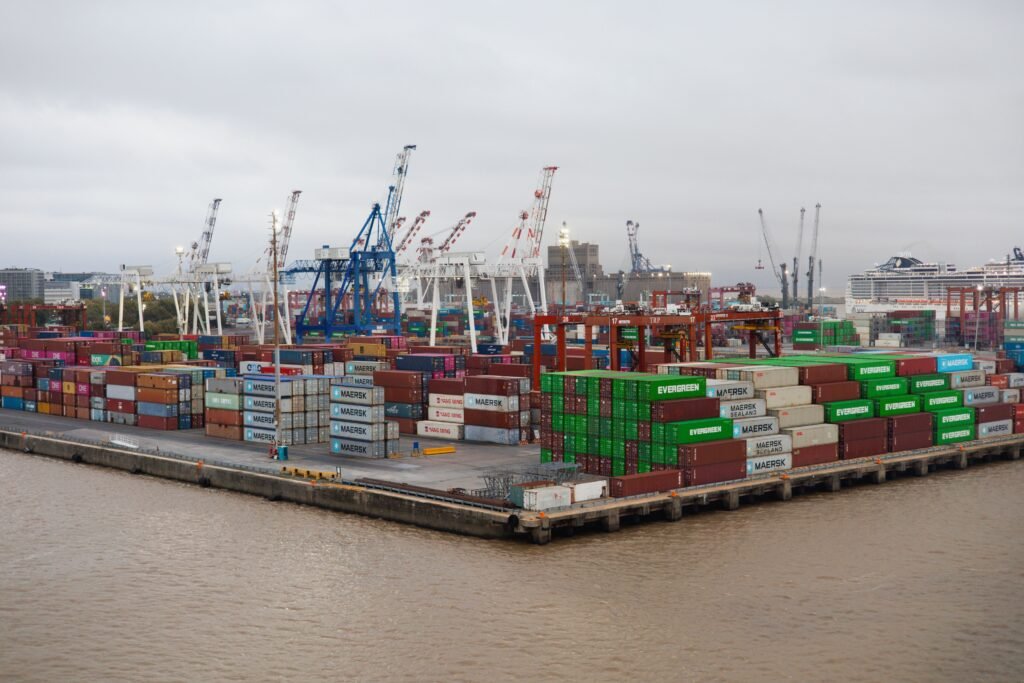
Most bulk essential oil shipments into Malaysia clear through Port Klang, the country’s principal container port, using the K1 declaration filed through the Royal Malaysian Customs Department‘s electronic system. A shipment with accurate paperwork and a correctly matched HS code typically clears within two to five working days; a missing certificate of origin or a mismatched tariff line is the most common cause of delay beyond that window.
Packaging choice affects both the customs process and the condition of the oil on arrival. Buyers moving larger volumes should weigh lined steel drums against flexitank shipment before confirming a container booking, since the two formats carry different handling requirements at the port and different implications for shelf life in transit; our comparison of drums versus flexitanks for bulk essential oil shipment covers the tradeoffs in more detail. Freight forwarders experienced with Port Klang’s clearance system can usually pre-lodge the K1 form before the vessel arrives, which keeps a shipment moving from berth to bonded warehouse rather than sitting in a queue for manual processing.
Common Questions From First-Time Malaysia Importers
Buyers new to the Malaysian market tend to ask a similar set of questions once they move past initial catalog browsing and start planning a first shipment. The answers below cover the points that come up most often before a purchase order is confirmed.
What documents should accompany a bulk essential oil shipment into Malaysia?
A complete package includes the commercial invoice, packing list, bill of lading, certificate of origin, Certificate of Analysis, GC-MS report, and Safety Data Sheet. Cosmetic-use shipments add the NPRA notification reference once NPRA issues it, and halal-sensitive orders add the certification document from the exporter’s recognized certifying body.
How long does customs clearance take at Port Klang?
A shipment with complete and accurate documentation generally clears in two to five working days. Delays usually trace back to an HS code mismatch, a missing certificate of origin, or a K1 declaration filed without supporting paperwork already lodged in the customs system.
Do all essential oils need halal certification to enter Malaysia?
No. Halal certification is not a customs entry requirement for essential oils, and an oil can clear Malaysian customs without it. Certification becomes practically necessary further downstream, once a manufacturer formulates the oil into a personal care or food product sold into Malaysia’s halal-conscious consumer market.
Can a cosmetic brand test the Malaysian market before NPRA notification is complete?
A cosmetic product legally on sale in Malaysia needs an active NPRA notification, so retail listings are not an option before that step is complete. Buyers can still request samples and finalize a formulation while NPRA processes the notification, provided the brand waits for the notification reference before offering the product for sale.
Buyers comparing Malaysia against other halal-sensitive markets in the region often plan a shipment schedule that serves more than one destination from a single production run. Our guide to importing bulk essential oils into the UAE outlines a similar halal and customs framework from the Middle East side, and a supplier able to issue matched documentation for both markets from one batch can save a formulator from running two separate qualification cycles.
A supplier that treats the K1 declaration, the NPRA notification reference, and the halal certificate as part of the same shipment file, rather than three separate requests handled in sequence, generally gets a first order through Port Klang with fewer questions from customs. That consistency becomes more valuable on the second and third order, once a Malaysian buyer has already built a formulation or a retail listing around a specific batch profile and needs the next shipment to match it exactly.