Description
🌍 Origin & Background
Rosemary is native to the Mediterranean region and cultivated worldwide, including India, Morocco, Spain, and Italy. Traditionally, it has been used for hair care, skin stimulation, mental alertness, and digestive support.
🌱 Plant Description & Raw Material
Rosmarinus officinalis is a woody perennial herb, 1–2 meters tall, with narrow, needle-like leaves and blue flowers. Essential oil is concentrated in leaf glands, and quality depends on soil, climate, harvest stage, and distillation efficiency.
🔥 Extraction Method
Rosemary Essential Oil is obtained via steam distillation of freshly harvested leaves and flowering tops. Harvesting is done at full maturity for optimal cineole and camphor content.
Each batch undergoes GC-MS analysis to ensure chemical composition, purity, and quality.
🔬 Chemical Composition (GC-MS Profile)
Major constituents include:
- 1,8-Cineole (Eucalyptol) – 30–50%
- α-Pinene – 10–15%
- Camphor – 10–20%
- Borneol – 3–5%
- Limonene – 2–4%
(Constituent percentages vary by chemotype, origin, and harvest conditions.)
🌿 Aroma Profile & Physical Characteristics
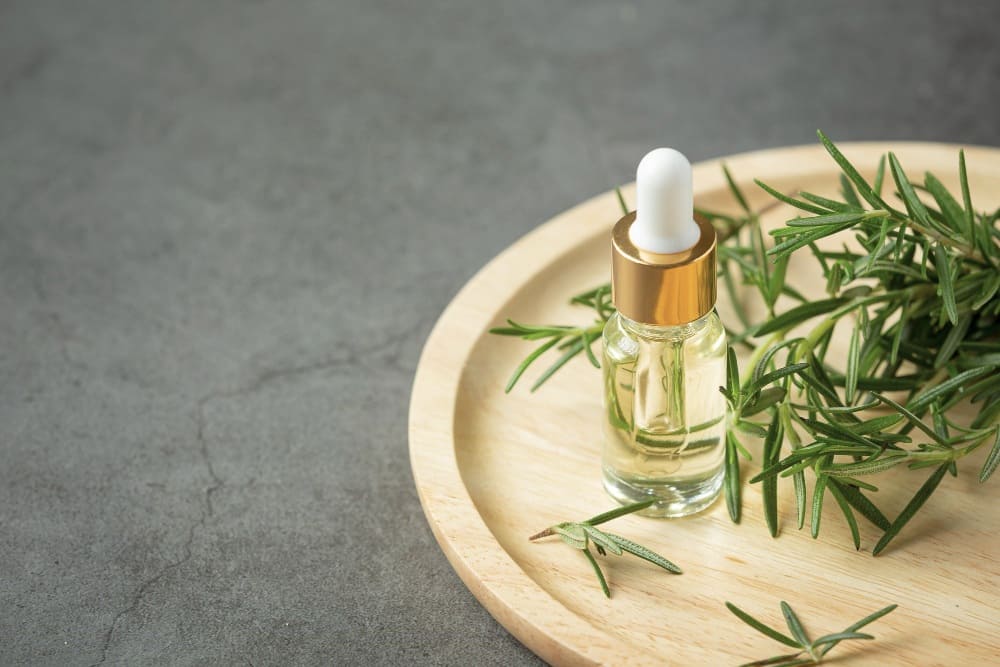
- Color: Pale yellow to greenish-yellow
- Aroma: Herbaceous, fresh, camphoraceous, slightly woody
- Consistency: Thin
- Solubility: Insoluble in water; soluble in alcohol and oils
🌿 Applications & Benefits
Cosmetics & Personal Care
Used in shampoos, hair oils, lotions, and skin-care products for hair growth stimulation, scalp health, and refreshing aroma.
Aromatherapy & Wellness
Promotes mental alertness, focus, circulation, and respiratory support.
Therapeutic & Traditional Use
Traditionally used for muscle relief, joint pain, headaches, and digestive stimulation.
Perfumery & Fragrance
Used as a middle/top note in fresh, herbal, and woody fragrance blends.
🌿 Blending Compatibility
Blends well with:
Lavender, Lemon, Peppermint, Tea Tree, Bergamot, Geranium, Eucalyptus, Cedarwood
⚠️ Safety & Precautions
- For external use only
- Avoid use in pregnant women and infants
- Dilute before topical application
- Avoid contact with eyes and sensitive areas
- Keep out of reach of children
Compliance
✔ GC-MS tested
✔ Export & cosmetic grade
✔ 100% natural & unadulterated
✔ Suitable for international B2B trade
📦 Wholesale Supply & Bulk Ordering
We supply Rosemary Essential Oil wholesale, direct from our manufacturing facility in India, with order tiers from sample quantities through <5KG, 5–25KG, 25–100KG, and 100KG+. Our manufacturing facility holds GMP, HACCP, HALAL, and ISO 9001:2015 certification, covering quality management, hygiene, and religious-dietary compliance across the full production process. Every wholesale order includes GC-MS testing, a Certificate of Analysis (COA), and MSDS documentation, with packaging available in 1kg, 5kg, 10kg, and 25kg HDPE or aluminum containers. Contact our export team for current wholesale pricing and lead times.
Buying in bulk? See our bulk essential oils supplier page for order sizes, shipping and payment terms.